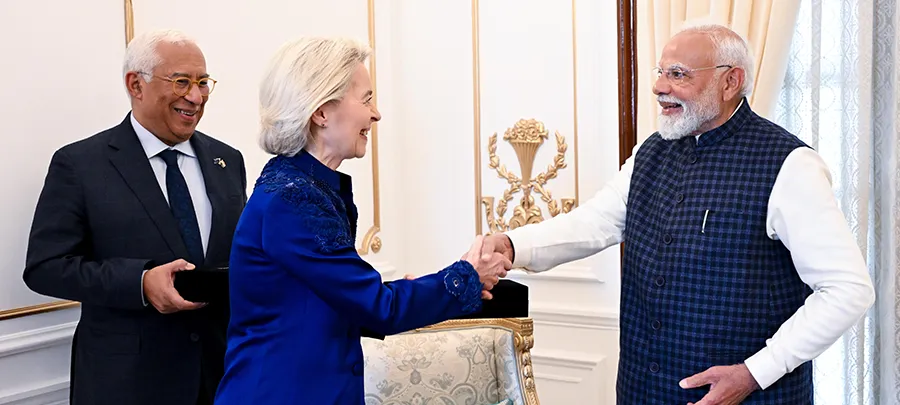
The recently signed EU–India Free Trade Agreement (FTA) marks a major milestone for European exporters and signals a new era for trade between the European Union and India. After years of negotiations, the deal significantly lowers tariffs, simplifies trade procedures, and improves market access—especially for premium and value-added products like wine, spirits, and other beverages.
For EU producers looking to expand beyond traditional export markets, India is no longer a “future opportunity”—it’s a market that’s opening right now.
Why India Matters for EU Wine & Beverage Exporters
India is one of the world’s fastest-growing consumer markets, with a young population, rising disposable incomes, and an expanding middle and upper class. While alcohol consumption per capita remains lower than in Western markets, demand for imported wine, spirits, and premium beverages has been growing steadily—particularly in metropolitan areas like Mumbai, Delhi, Bengaluru, and Goa. You can read an analysis on our blog here.
Imported wine is increasingly associated with:
-
Premium lifestyle and international dining
-
Hospitality, hotels, and fine-dining restaurants
-
Gifting and corporate consumption
-
Urban, educated consumers seeking global brands
Until recently, high import duties and complex regulations limited market entry. The new EU–India FTA changes that equation.
Lower Tariffs = Better Margins & Stronger Demand
One of the most important outcomes of the agreement is the reduction of import duties on European alcoholic beverages, including wine and spirits
On the Indian side – tariffs on key EU beverage imports fall sharply:
Wine: Current Indian import duties on EU wines — often as high as ~150% — will be dramatically reduced. Under the deal, duties will be cut to ~75% immediately, with further reductions over time, eventually reaching about 20–30% for most wines.
Spirits: Import duties on European spirits — historically also up to about 150% — will be cut in stages, with an initial halving of tariffs and a phased reduction to about 40% over the implementation period.
Beer: Tariffs on beer will be lowered from roughly 110% to about 50% under the agreement.
These tariff cuts are staggered over several years — some implemented immediately when the agreement enters into force, and others phased over 5–10 years.
Key benefits for EU producers:
-
Lower landed costs for importers and distributors
-
More competitive shelf prices for consumers
-
Higher margins for both exporters and Indian partners
-
Increased willingness from Indian importers to test new brands
While India will continue to regulate alcohol at both national and state levels, the FTA creates a clearer, more predictable framework for long-term trade—something importers value highly when building portfolios.
What This Means for Wine & Beverage Producers
For EU wineries, breweries, and spirits producers, the agreement makes India:
-
Easier to enter
-
Less risky to explore
-
More attractive for premium and mid-range products
However, success still depends on finding the right importer—one that understands local regulations, has strong distribution channels, and actively works with imported brands.
This is where preparation matters:
-
Understanding which importers specialize in wine vs. spirits
-
Knowing who already imports from Europe
-
Targeting companies active in horeca, retail, or e-commerce
-
Reaching real decision-makers, not generic inboxes
How BestWineImporters Helps You Enter the Indian Market
BestWineImporters helps producers turn trade opportunities like the EU–India FTA into real commercial results.
With BWI, you can:
-
Identify verified wine, spirits, and beverage importers in India
-
Filter companies by product focus, portfolio, and origin
-
Access direct contact details of buyers and decision-makers
-
Discover importers already working with European producers
-
Track new leads as the Indian market opens further
Instead of guessing who to contact—or relying only on trade fairs—you can build a targeted, data-driven export strategy for India.
A Market Opening at the Right Time
The EU–India Free Trade Agreement comes at a moment when Indian consumers are actively trading up, importers are looking for differentiated products, and European producers are seeking growth beyond saturated markets.
For wine and beverage exporters, India is no longer just a “long-term play.” With lower taxes, improving regulations, and better market access, it’s becoming a strategic opportunity—right now.
And with the right data and importer connections, entering the Indian market can be faster, smarter, and far more profitable.
Image: © European Union, 202X, licensed under CC BY 4.0